
How Car Detailing Protects Your Investment: The Financial Case for Auto Detailing

When most car owners think of car detailing, they imagine a glossy finish, a spotless interior, and that satisfying “new car” feel. But beyond aesthetics, detailing is a strategic investment that can protect your vehicle’s value, reduce maintenance costs, and even enhance resale potential. In this guide, we explore the financial impact of auto detailing, supported by data, statistics, and practical insights.
1. Why Vehicle Condition Matters
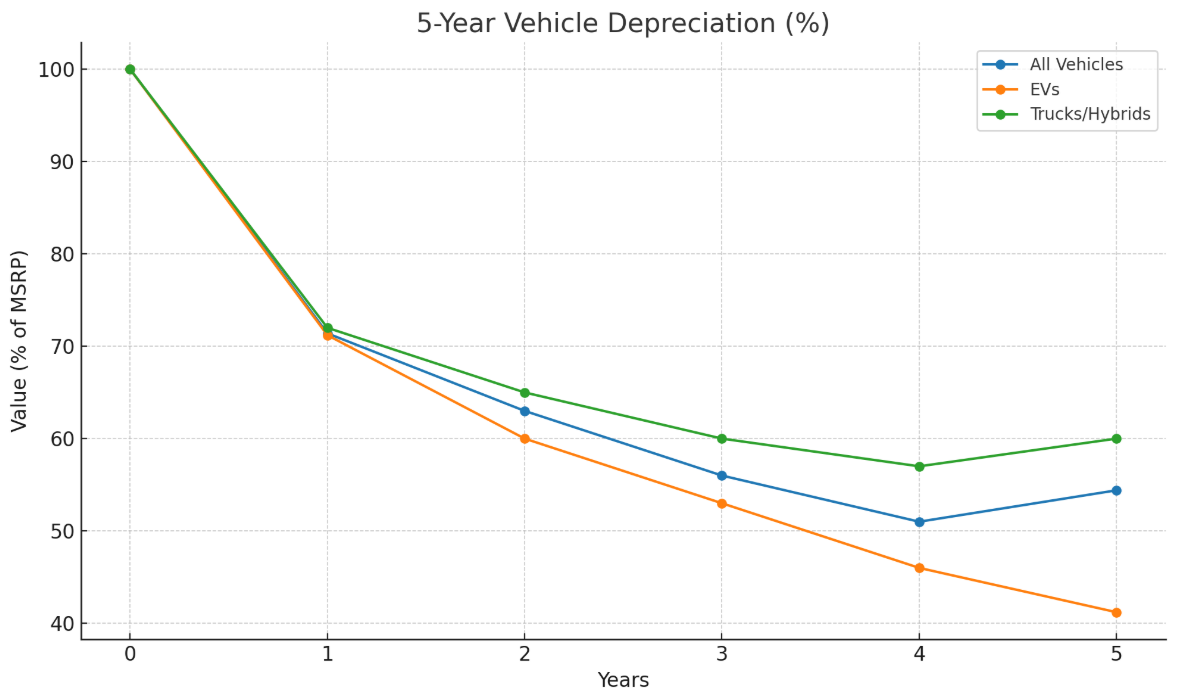
Vehicles are depreciating assets. According to iSeeCars (2025), the average 5-year depreciation across all vehicles is 45.6%, with electric vehicles averaging 58.8%, and trucks or hybrids around 40%. The first year hits hardest—Edmunds reports that a new Ford F-150 loses 28.6% of its value within the first 12 months.
While depreciation is inevitable, vehicle condition plays a measurable role in resale and trade-in value. Kelley Blue Book (KBB) highlights that a well-maintained, clean, and detailed car generally commands a higher offer, while poorly maintained vehicles often sell below market expectations.
Key takeaway: Every car loses value over time, but professional detailing can slow the visual and cosmetic depreciation that buyers notice immediately.
2. The Connection Between Appearance and Resale Value
A vehicle’s exterior and interior appearance heavily influence buyers’ perception of value. Studies from Manheim’s MMR system and Cox Automotive show that condition grades directly affect wholesale and retail prices. Cars graded higher for cleanliness, surface care, and interior maintenance consistently sell faster and at higher prices.
Illustrative example: Pre-sale detailing can generate a measurable return, especially for vehicles with higher market value.
Beyond resale, first impressions matter. Buyers equate a clean, odor-free interior and flawless exterior with meticulous maintenance, which often translates into a higher willingness to pay.
3. Interior Detailing: Protecting Your Investment from the Inside Out
Interior detailing goes beyond aesthetics; it preserves materials and prevents costly repairs. Neglecting carpets, upholstery, and leather can lead to:
- Stains and set-in dirt
- Leather cracking and fading
- Mold and bacterial growth
- Odor retention
For example, Consumer Reports emphasizes that regular cleaning and conditioning of interior surfaces maintains durability and prevents early deterioration. Over time, these small interventions can save hundreds to thousands of dollars in repair or replacement costs.
Pro tip: Vacuuming, fabric extraction, leather conditioning, and cabin deodorization every 3–6 months is ideal for commuter or family vehicles.
4. Exterior Detailing: Long-Term Paint and Surface Protection
The exterior of your vehicle is continuously exposed to hazards like UV rays, road debris, pollutants, and salt. Data from Consumer Reports and iSeeCars show that vehicles maintained with protective coatings, wax, or ceramic treatments experience slower paint oxidation, fewer scratches, and longer-lasting visual appeal.
A protective layer not only preserves aesthetics but reduces future repair costs, including paint touch-ups and panel refinishing.
5. The Cost-Benefit of Professional Detailing vs. Basic Car Wash
While weekly car washes remove dirt and grime, they don’t prevent the microscopic damage that accumulates over time. Professional auto detailing addresses:
- Contaminants bonded to paint (iron, tar, sap)
- Interior deep cleaning (all fabrics, vents, and crevices)
- Surface protection with wax, sealant, or ceramic coating
Over a 5-year period, investing $200–$400 per detailing session typically yields greater preservation of vehicle value than $10–$20 per weekly wash, based on condition-grade impact on resale.
Conclusion: Investing strategically in professional detailing can pay for itself through retained value and reduced maintenance costs.
6. Real-World Evidence: Dealers and Used Vehicle Economics
Dealers routinely spend $1,600–$1,750 per vehicle on reconditioning—including detailing, minor bodywork, and interior touch-ups—because it increases final sale price and reduces time on lot (~11 days to frontline per Cox Automotive whitepapers).
This practice provides independent evidence that condition and appearance materially affect economic outcomes, aligning with the benefits individual owners can achieve through professional auto detailing.
7. Summary: Car Detailing as Smart Ownership
Auto detailing is more than a luxury—it’s a financial strategy. Key takeaways:
- Depreciation is inevitable, but condition can meaningfully influence resale value.
- Interior maintenance prevents costly repairs and preserves materials.
- Exterior protection reduces damage from UV, debris, and chemical exposure.
- Professional detailing delivers measurable ROI, especially before sale or trade-in.
- Dealers invest heavily in reconditioning—an independent signal that detailing has economic value.
For vehicle owners looking to maximize their investment, a consistent detailing schedule offers tangible benefits, preserves resale value, and keeps vehicles looking and performing their best.
Looking for professional auto detailing in Toronto? Book your next appointment with Detail Me GTA and protect your vehicle all year round.
8. Sources
- iSeeCars. “5-Year Vehicle Depreciation Analysis,” 2025. https://www.iseecars.com
- Edmunds. “New Vehicle Depreciation Insights: F-150 Example.” https://www.edmunds.com
- Kelley Blue Book. “Trade-in Value Guide: Condition Matters.” https://www.kbb.com
- Manheim / Cox Automotive. MMR Methodology and AutoGrade condition scoring.
- NIADA. “Average Reconditioning Costs for Used Vehicles,” 2023–2024.
- Cox Automotive. “Time to Frontline: Recon Impact on Inventory Turns.”
- Consumer Reports. “Vehicle Care and Maintenance Testing: Interior & Wax Longevity.”

